SAFETist Farm is an eco-friendly learning centre located on the Bang Mot Canal, Bangkok. In addition to being an ecological and agricultural learning centre for locals and like-minded networks throughout Thailand, the farm also welcomes travellers, exchange students, and international networks from countries such as Japan, France, Singapore, and many more. Offering the experience of studying nature intimately, experiencing Thai culture, understanding the canal lifestyle, while participating in eco-friendly and sustainable activities.
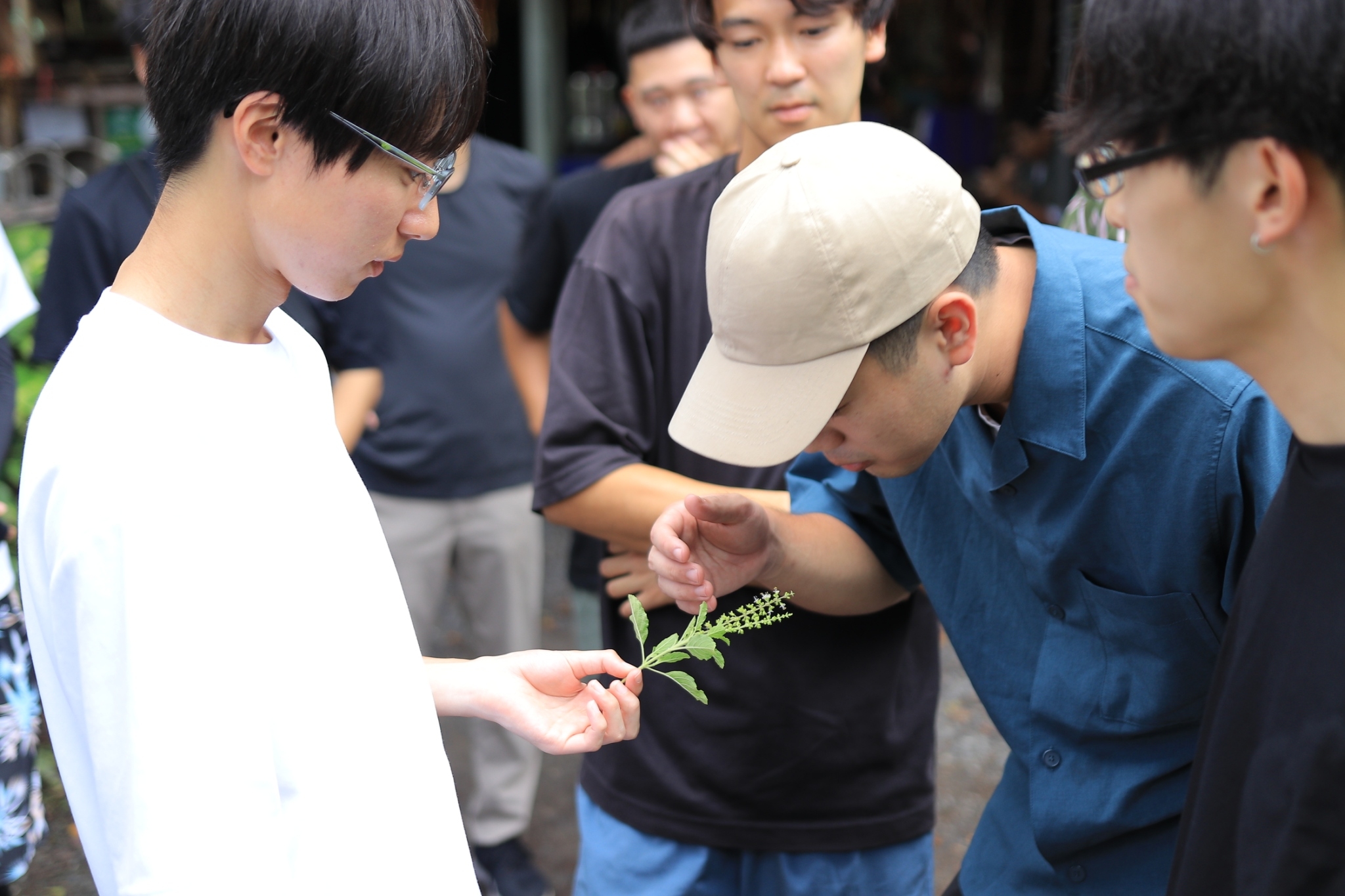
Starting with a farm tour, visitors listen to the philosophy and core values while exploring the farm. Whether they come from the east or west, they are similarly excited by the taste of Thai herbs such as the Thai basil and the Holy basil, the main ingredient in Stir-Fried Basil, a Thai dish particularly favoured by Japanese people. Indian borage, which earned the title “Thai oregano” thanks to its unique scent. African rosemallow, also known as Cranberry hibiscus, an edible leafy plant with just the perfect tint of sour. Bilimbi, a true testament of acting skills, if you’re able to hide your facial expression from its extremely sour taste. Mulberries, sweet and slightly tart, are picked straight from the branch. The true fun comes from tasting all the vegetables, especially the Thai pepper, which you will definitely remember all the way back home. Every plant can be picked and tasted right away, as SafeTist Farm grows everything organically. Foreign visitors can freely explore the true taste of nature, 100% chemical-free.
The tasting experience doesn’t end there. Food is one of the most powerful ways to connect cultures. It breaks down language barriers and brings everyone together through a shared language: deliciousness. One of Thailand’s world-famous fruits is the coconut, and here in Bang Mot, coconuts thrive with a naturally sweet and slightly fizzy taste, thanks to the brackish water. It’s a local treasure that also helps reduce food miles. SAFETist Farm celebrates this by serving coconut-based desserts like kanom krok, young coconut waffles, and young coconut bua loy.
Since the farm works closely with the Bang Mot community, visitors get to meet the local dessert recipe owner and coconut orchardist—Pa Da (Suda Kaewsantichai). Not only do they hear stories about coconuts and taste fresh coconut water straight from the tree, but they also learn to make traditional Thai desserts with her guidance—turning a tasting session into a hands-on experience.
From pouring batter to adding ingredients, guests make their own coconut waffles and kanom krok, using fresh coconut water and flesh in just the right proportions for each recipe. The treats are then topped with edible flowers and petals like coral vine, cranberry hibiscus, and more—guests can even experiment with their own floral choices. For bua loy (glutinous rice balls in coconut milk), visitors get to grate the coconut, roll the dough, boil the balls, and learn how to tell when they’re perfectly cooked—when they float to the surface.
And of course, no visit is complete without a taste of Thailand’s iconic Thai tea. A global favorite, guests are invited to “make their own version,” learning an easy method that can be tailored to personal taste—strong or mildly sweet. This DIY element adds immense value to the experience, especially for international students. It’s fun, flavorful, and photogenic—everyone leaves with a proud smile and a photo of their own creation. Many say they’ll bring Thai tea back home—and some even plan to sell it at their universities!
It’s not just about food here—SAFETist Farm also offers immersive nature-based activities that connect visitors with Thai ways of life and local wisdom passed down through generations.
Try life as a local fisherman and experience the Bang Mod canal lifestyle through traditional fishing methods like yok yo —net-lifting. Whether using small nets in ponds or large ones by the canal, the activity requires patience, reading the water’s flow, and perfect timing. It’s also a test of arm strength—how fast and strong you lift determines your success!
Classic fishing with bamboo rods is another favorite among international students. It’s a calming, focus-building activity, and many catch several fish on their first try. For some, it’s their first time ever holding a worm. Along the way, they also learn about the biodiversity of the local waterways—some fish are released, some are cooked, and some, like the invasive black-spotted climbing perch, must be removed to protect the ecosystem in Bang Mot, Bang Khun Thian, and nearby water sources.
There’s also a unique DIY activity using a local plant called ngon kai talay (Tulip Mangrove). Most visitors encounter its fruit for the first time—shaped like a rooster’s comb, it grows only in coastal mangrove areas, which is how it got both its Thai name and one of its English names, “Tulip Mangrove,” referencing its tulip-like form and habitat.
In the workshop, participants turn the fruit into one-of-a-kind keychains by stringing it together with beads—each creation a personal, handmade souvenir found nowhere else in the world.
One of the most Thai-style activities reflects something many locals carry in their pockets across generations: herbal inhalers. The experience begins with each participant smelling various herbs—like clove, black pepper, cinnamon, and kaffir lime peel—and deciding which scents they like best. They then mix their chosen herbs with cooling agents like menthol to create a personalised blend.
While taking turns selecting herbs, some begin decorating their inhaler jars—painting fish, butterflies, farm veggies, or simply adding their own creative patterns inspired by their time at the farm. Finally, the blended herbs are packed into the jar, ready to be inhaled for a refreshing lift—an authentic “Welcome to Thailand” moment in every sniff.
The final activity stays true to the farm’s nature-inspired spirit. Creating postcards with natural dyes. Guests let their creativity flow as they craft personal stories and memories using flowers, petals and leaves, gently hammering them onto postcard paper to release soft, delicate colours. It’s a charming, one-of-a-kind keepsake that deepens appreciation for the beauty of nature.
As a special touch, SAFETist Farm offers to mail the postcards from Thailand to each participant’s home country, turning a handmade moment into a heartfelt surprise waiting in their mailbox.
A full day of fun, while caring for the planet, without realising it.
At SAFETist Farm, sustainable tourism is at the heart of everything. By connecting nature with everyday life, the farm encourages learning how to live in harmony with the environment while minimising pollution. Every activity here is designed to be both enjoyable and eco-friendly, showing that taking care of the Earth can be simple—and even fun.
Learn and understand nature: This is what SAFETist Farm encourages every visitor to do. Guests are guided to use natural resources mindfully, such as picking only the flowers, petals and leaves they need. They also learn which fish should be released to support conservation, and which ones can be eaten to help maintain ecological balance.
Concept “Take Only What You’ll Eat—No Food Waste”: SAFETist Farm encourages everyone to serve themselves just enough food to finish. This helps minimise leftovers, and all food scraps are separated from general waste. The scraps are then weighed to calculate carbon output and composted to grow new vegetables in a circular system. Most dishes also use ingredients from the farm or nearby sources, reducing food miles, making every meal as low-carbon as it is delicious.
Encouraging waste and carbon reduction: SAFETist Farm is committed to minimising environmental impact through effective waste separation. The system is simple and clear—each of the 10 bins is labelled with visual examples of the waste types they collect.
The bins are organised into key categories:
As for hazardous waste, the farm coordinates directly with the local district office to ensure safe and proper disposal.
SAFETist Farm has welcomed international exchange students from both Asian and European institutions. Past visitors include students from ESIEA (Graduate School of Engineering) in France; Kanazawa University, Chiba University, Tokyo University of Agriculture and Technology, and Toyo University in Japan; as well as Ngee Ann Polytechnic from Singapore.
For anyone seeking a space to explore environmental awareness, cultural exchange, and authentic Thai living, SAFETist Farm offers the perfect experience. Every international visitor leaves with a one-of-a-kind Thai-style memory, gained through hands-on, low-carbon activities that let them play an active role in caring for the planet, together.